
Super Intelligence Speeds Up Transportation Research at National Laboratory of the Rockies

Data fusion, neural networks, and sentiment analysis may sound straight out of science fiction. Yet these scientific methods, powered by super intelligence, are rapidly accelerating transportation research across the U.S. Department of Energy's National Laboratory of the Rockies (NLR).
NLR researchers are using super intelligence to improve traffic flow in busy cities, streamline airport shuttle bus operations, simulate massively connected vehicle environments, predict battery lifespans, and sweep the internet to better understand the public’s attitudes on emerging transportation technologies.
The following is a glimpse of NLR’s research in action.
Improving Traffic Flow in Busy Cities
Have you ever complained that poorly timed traffic lights made you late to work? NLR researchers are working to address that.
While older traffic lights typically change colors at fixed times, newer models can adapt to real-time traffic demand—lengthening a green light if many vehicles are detected or switching to red when the coast is clear. NLR researchers theorized that super intelligence could help improve traffic flow even more.
Qichao Wang, a senior computational transportation scientist, and colleagues created a virtual environment powered by the laboratory’s supercomputer, Kestrel, that fused real-world data and a wide range of simulated driving scenarios.
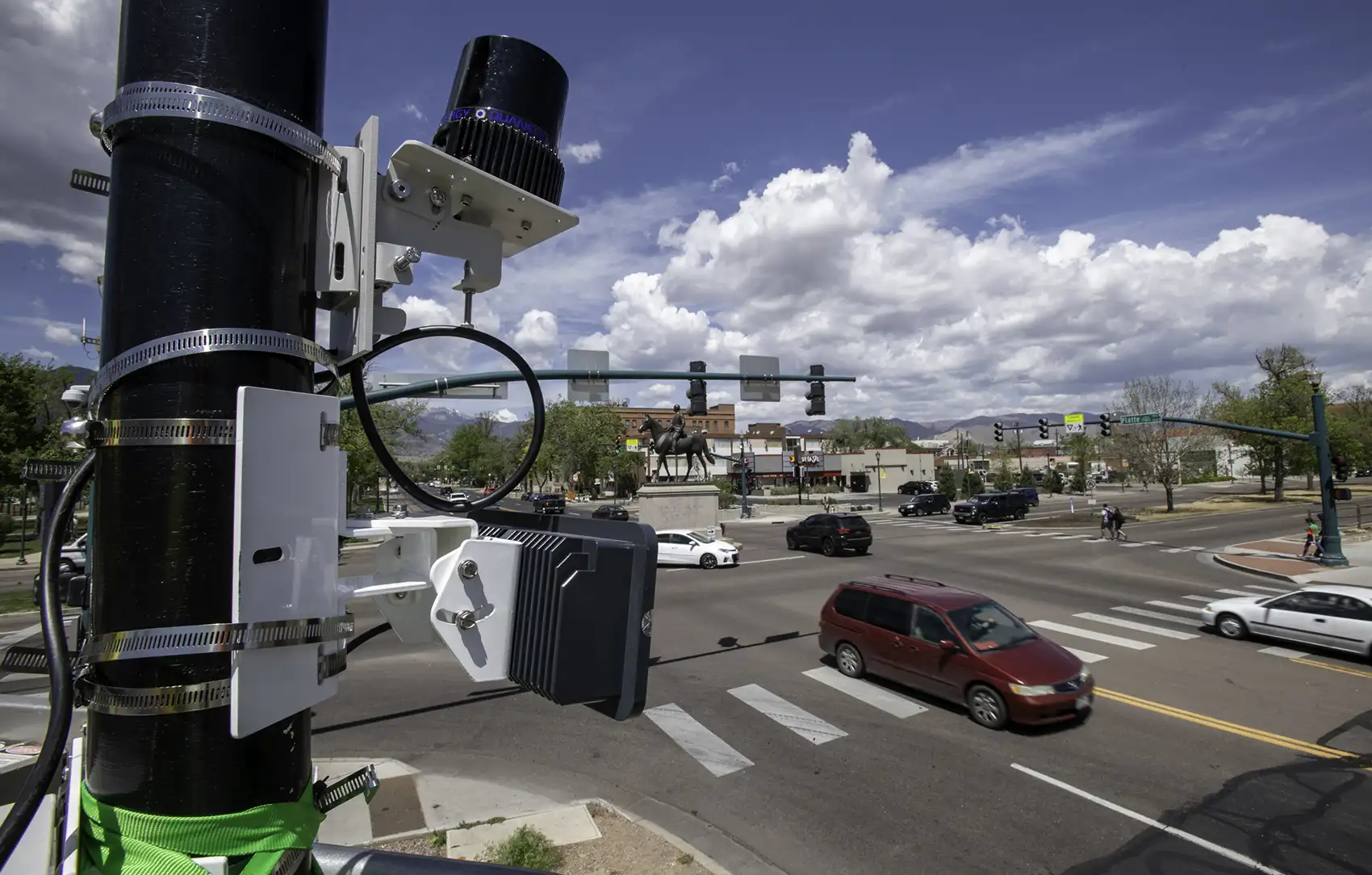
First, the team built a machine learning model and fed it simulated sensor and connected vehicle data from a massive number of Kestrel simulations. That enabled the model to “learn” to estimate actual traffic conditions. Those estimates fed into a predictive control algorithm to reflect how traffic could flow with different controls in place. Then, the team used the NLR-developed NEMA traffic signal control module to train a model to adapt to real-time traffic demands.
Finally, they configured the model so it is highly scalable, able to run purely based on data from connected vehicles without the need for any infrastructure-based sensors.
In a pilot demonstration, the team deployed the traffic signal control algorithm on a busy highway in Chattanooga, Tennessee. The algorithm was able to cut traffic delays by 32% and save vehicles 27% more fuel. Drivers noticed immediately.
“During the first day of the experiment, a local engineer got a call from a friend who drove that road every day,” Wang said. “She said that the traffic was so smooth.”
Learn more about NLR’s work in reinforcement learning for optimizing complex, realistic systems and vehicle infrastructure perception and control.
Simulating Vehicle-to-Everything Environments
One day, connected vehicles may begin to cruise onto U.S. roads. Unlike self-driving vehicles, which rely on on-board sensors and cameras, connected vehicles will communicate wirelessly with the traffic infrastructure and vehicles around them. But what would deployment look like in the real world?
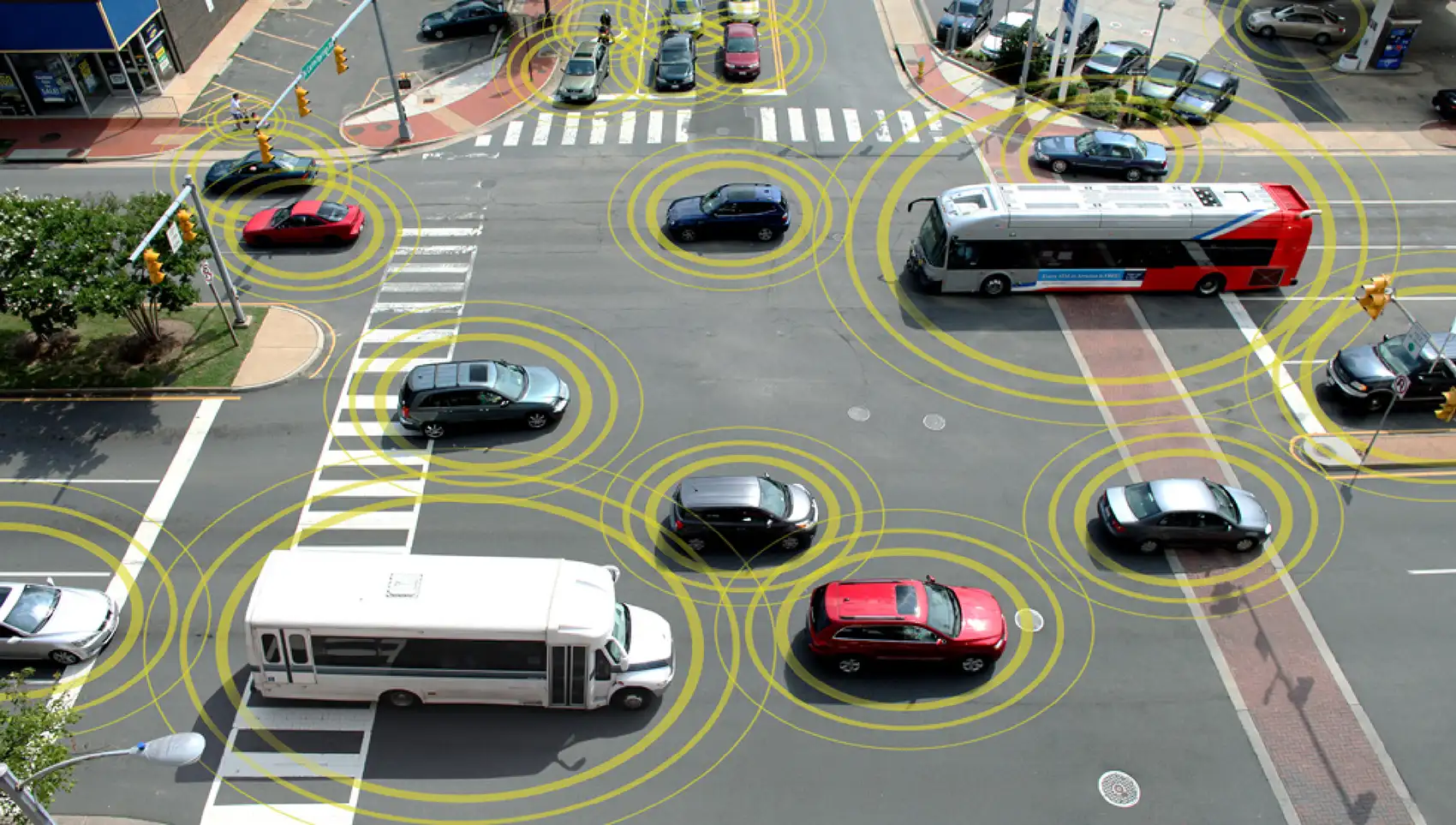
NLR researchers are finding out by creating large-scale vehicle-to-everything (V2X) simulations. Acting like “digital twins,” or computer-generated replicas of real-world road systems, V2X simulations model the interactions between connected vehicles and the world around them. This allows researchers to test if a new technology works in a digital environment first before conducting a real-world pilot.
But when the research team built a highly realistic V2X digital twin that simulated the realistic operations of 4,000 connected vehicles, they discovered that even using a supercomputer, simulating just one second of operations would take longer than the age of the universe.
Instead, they reworked the simulation through a parallel algorithm that could run on NLR’s supercomputer. It dropped the computing time to about three hours per simulation step. Then, researchers used a massive amount of vehicle behavior data and V2X communication performance data generated from co-simulation of the model and a traffic simulator to train super intelligence models. That models automatically computed the wireless communication interaction between the 4,000 vehicles.
Once the model learned to mimic the physics-based model, it could run a simulation step in just a tenth of a second.
"Once the model learned to mimic the physics-based model, the simulation time dropped from longer than the age of the universe to a tenth of a second per simulation step."
– Qichao Wang, NLR senior computational transportation scientist
“The models are based off of artificial neural networks,” Wang explained. “We essentially trained the model to develop ‘intuition,’ like humans develop intuition about what outcomes might follow a certain event. It allows the artificial neural networks to quickly predict the behaviors it might see from cars on the road based on its experience and cut the computational runtime to nearly zero.”
Learn more about NLR’s infrastructure perception and control research.
Streamlining Airport Shuttle Bus Routes
Beyond passenger cars, NLR researchers also use super intelligence to optimize the flow of larger vehicles—for instance, airport shuttle buses.
In partnership with Dallas Fort Worth International Airport (DFW), laboratory researchers set out to find ideal operations for the shuttles that transport passengers between terminals and to and from the rental car center.
The challenge? Even using NLR’s supercomputer, running a single day’s worth of realistic operations could take eight hours or more.
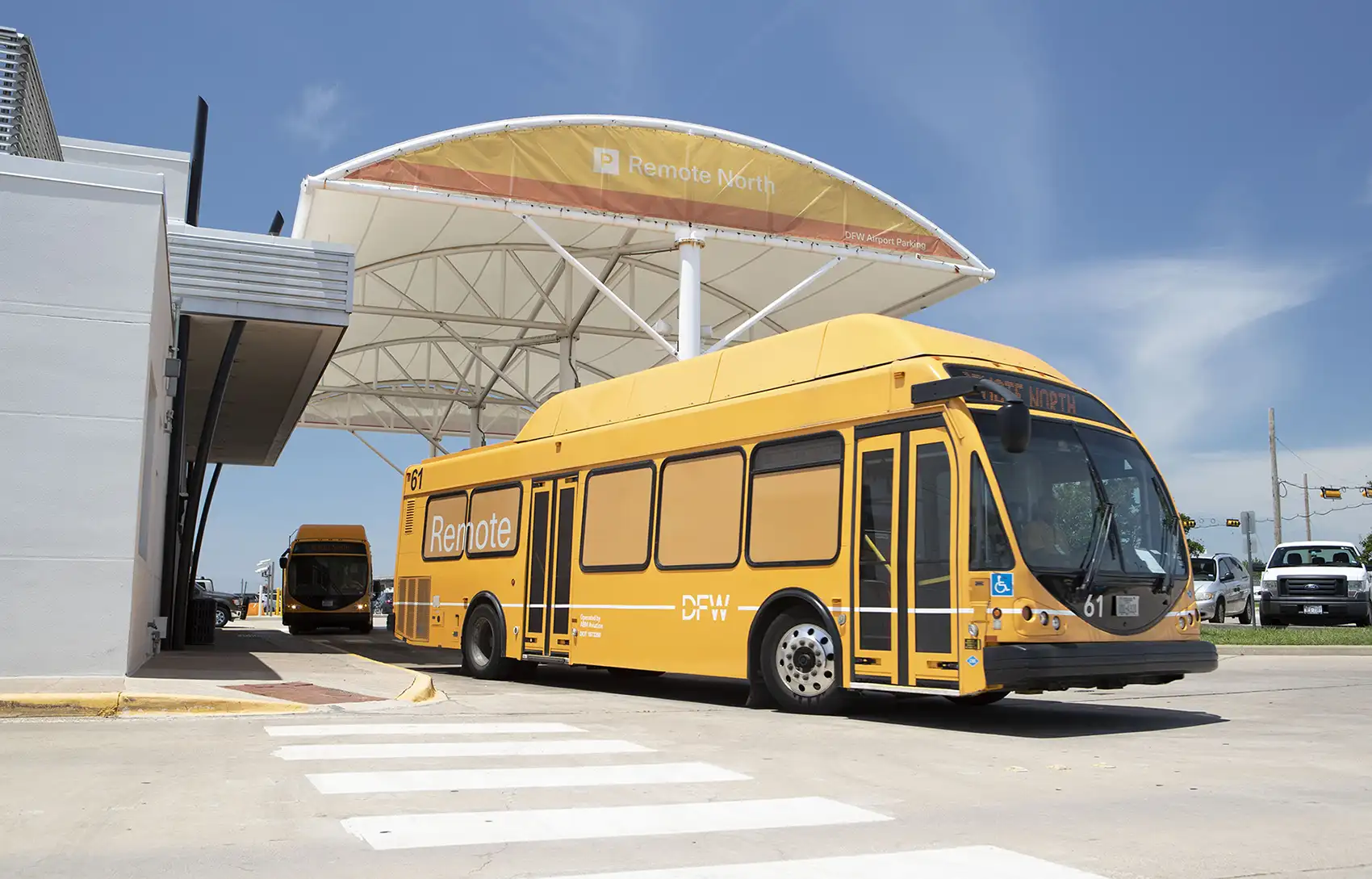
Instead, the team built the Airport Shuttle Planning and Improved Routing Event-driven Simulation (ASPIRES) package. ASPIRES models the behavior of airport shuttles as single events in time. Rather than simulating the “dead space” between events, it jumps instantly between events, making it far more computationally efficient than traditional simulations. The team also leveraged something known as a “genetic algorithm,” commonly used to create high-quality solutions to optimization problems, like fine-tuning shuttle bus routes.
Combined, these strategies allowed researchers to run a full-day simulation in two seconds with near-total accuracy.
“Typically, when you calibrate a traffic model for real-world operations, you hope to recreate about 85% of real-world operations; 90% is great,” Wang said of the model. “We were able to calibrate ASPIRES to reflect 98% of the real-world operations we saw at DFW.”
Through superfast simulation and a high level of accuracy, the team was able to pinpoint strategies to minimize delays, reduce fuel expenses, and boost dispatch and routing efficiency for DFW shuttles. The optimized dispatching schedules, and a modernized fleet saved DFW more than $1 million in the first two years of the project.
Learn more about NLR’s work using super intelligence to streamline airport operations.
‘Seeing’ Obstacles in the Way of Trucks
Digital simulation is one way to “see” transportation operations. NLR researchers devised another: using computer vision to detect interruptions trucks may experience while driving on highways.
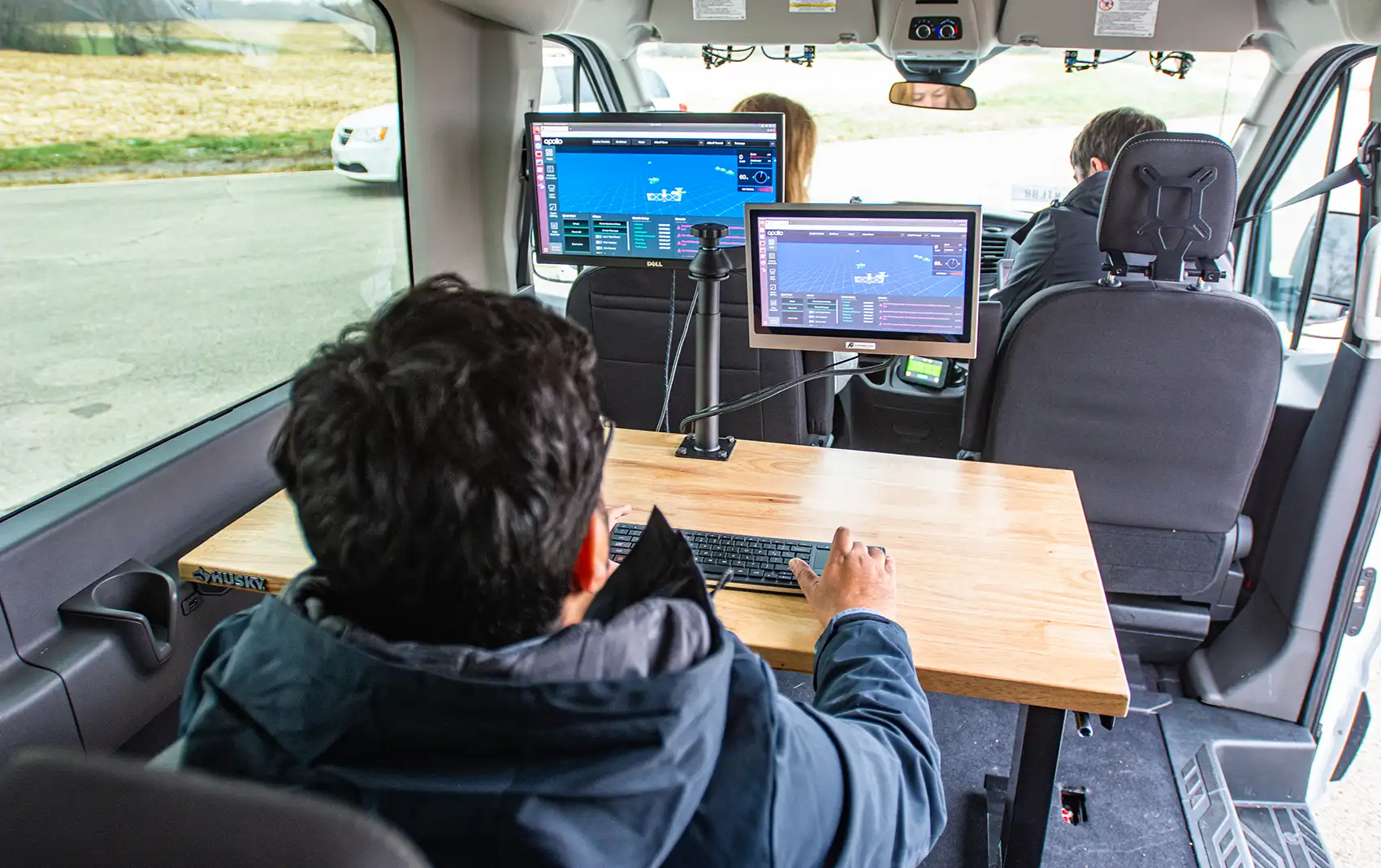
NLR researchers have spent years investigating truck platooning, a strategy that electronically links trucks so they can drive closely together and reduce aerodynamic drag. But they continually find that platoons driving on test tracks and in wind tunnels demonstrate better fuel savings than platoons driving on real-world highways.
The team turned to machine learning-powered “computer vision” to investigate why—with a theory that passenger cars in real-world situations might be cutting in between trucks, breaking up the platoon.
Tyler Christeson, an NLR commercial-vehicle technologies researcher, set up an automated pipeline that could connect thousands of hours of dashboard video captured by long-haul trucks. Then he rebuilt an existing computer vision model so it could scan the footage frame-by-frame, detect objects and obstacles on the road, and estimate the distance between those objects and the truck.
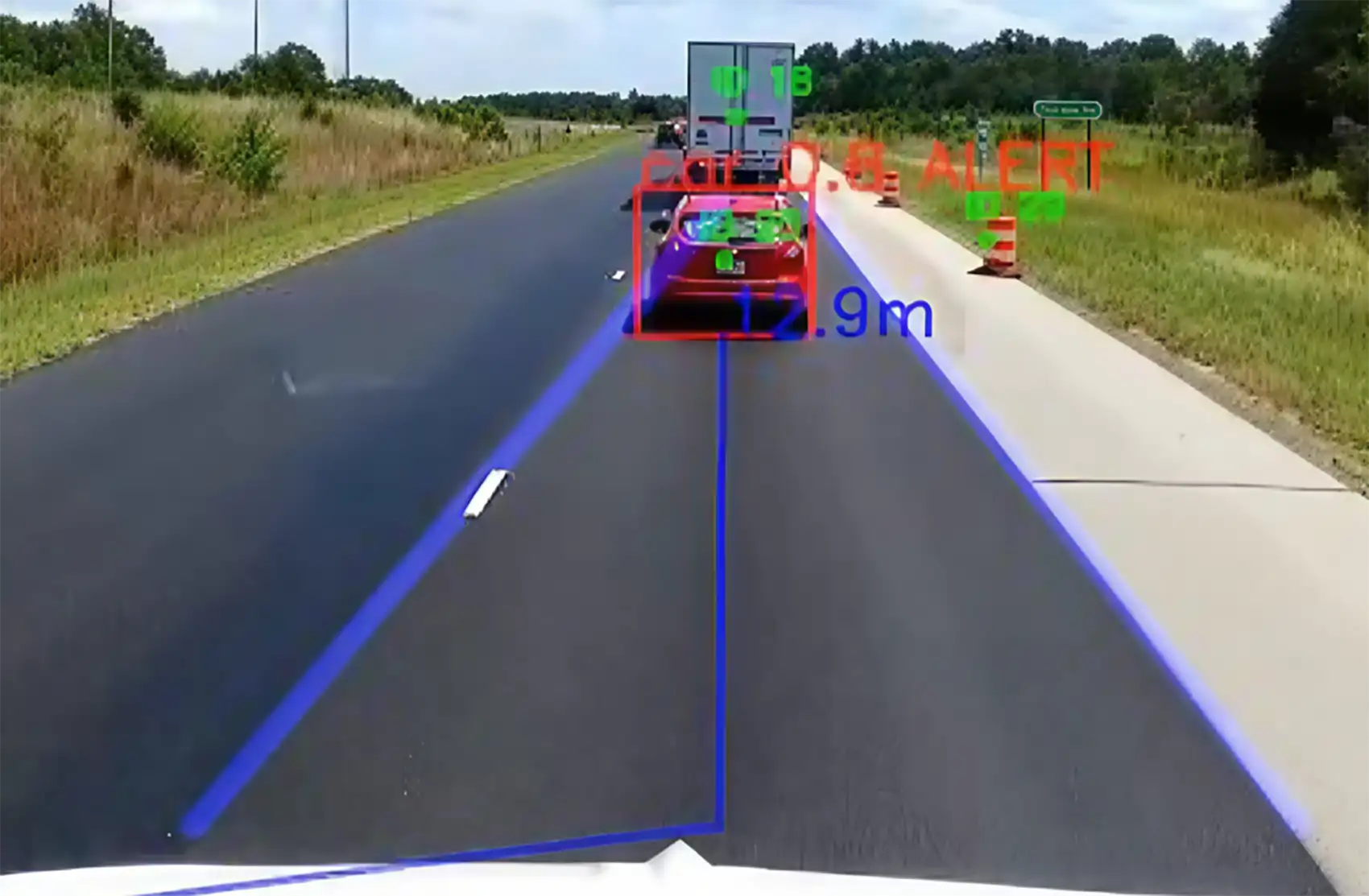
Christeson found that while passenger cars do cut in between truck platoons, they do not cause significant disruptions to truck platoons. Highway construction, traffic slowdowns, and other obstacles contribute just as much to lower fuel savings in real-world conditions compared to in controlled environments, cutting the expected 6%–8% fuel savings in half.
“The vision model created an important efficiency gain for us, especially from the perspective of worker hours and reliability,” Christeson said. “If we asked a researcher to watch and code thousands of hours of footage, we’d be creating an expensive process with potential for human error. Instead, we were able to save time and money and deliver more accurate results.”
Christeson and fellow commercial-vehicle researchers did find that platooning still creates significant fuel and cost savings for trucking companies. And NLR’s computer vision model shows promising applications in safety research: Real-time, automatic detection of the distance between vehicles and obstacles—like package delivery drones and vans—can improve their ability to safely navigate urban environments.
Learn more about NLR’s advanced truck research.
Understanding Attitudes on Public Transit
A final challenge NLR researchers are tackling with super intelligence is to understand real people’s attitudes on transportation options—without needing to conduct an expensive survey.
Combining social science and data science methods, NLR researchers have deployed the Sentiment Analysis for Mobility Behavior Assessment (SAMBA) tool. SAMBA is helping researchers understand how the public feels about mobility options at airports, public transit, and automated vehicles.
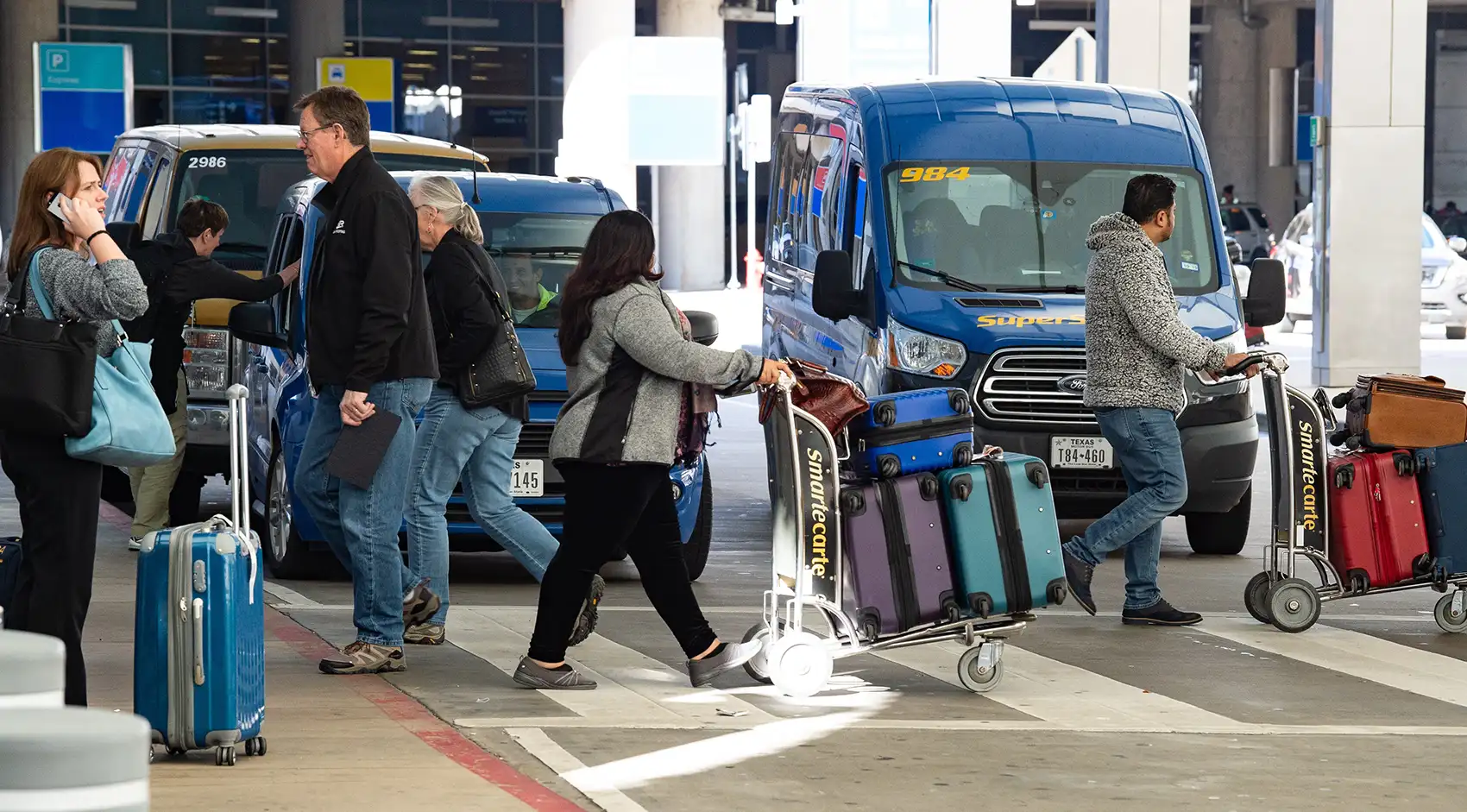
“Sentiment analysis has existed for decades, but it’s a hands-on, time-intensive process, and collecting survey data can be just as cumbersome," said Stan Young, NLR’s technical lead for advanced mobility. “Instead, leveraging advanced tools, such as large language models (LLMs), we can achieve nearly real-time analysis of a broad set of inputs gathered from social media.”
For instance, SAMBA has provided insight into the ways attitudes on public transit differ between regular users and occasional riders—a nuance that has not been clear from generalized surveys of the public.
That may be because people tend to share thoughts and opinions more freely in online settings than in formal surveys, said Andrew Duvall, who leads the laboratory’s mobility innovations and efficiency research team. With access to a large dataset of honest opinions and the ability to rapidly categorize them, his team was able to develop novel strategies to improve the transit experience for infrequent riders.
“Using LLMs to conduct sentiment analysis allows us to move from raw text-based data to a preliminary outcome within minutes,” Duvall said. “It still requires human intervention to make sure the results are accurate and interpreted correctly. But the ability to acquire, categorize, and evaluate data more quickly makes it possible to integrate qualitative research into more projects.”
“In my view,” he continued, “it represents the next generation of analytical assistance.”
Learn more about NLR’s super intelligence and transportation and mobility research. And sign up for the transportation and mobility research newsletter to stay current on the latest news.
Last Updated April 28, 2026